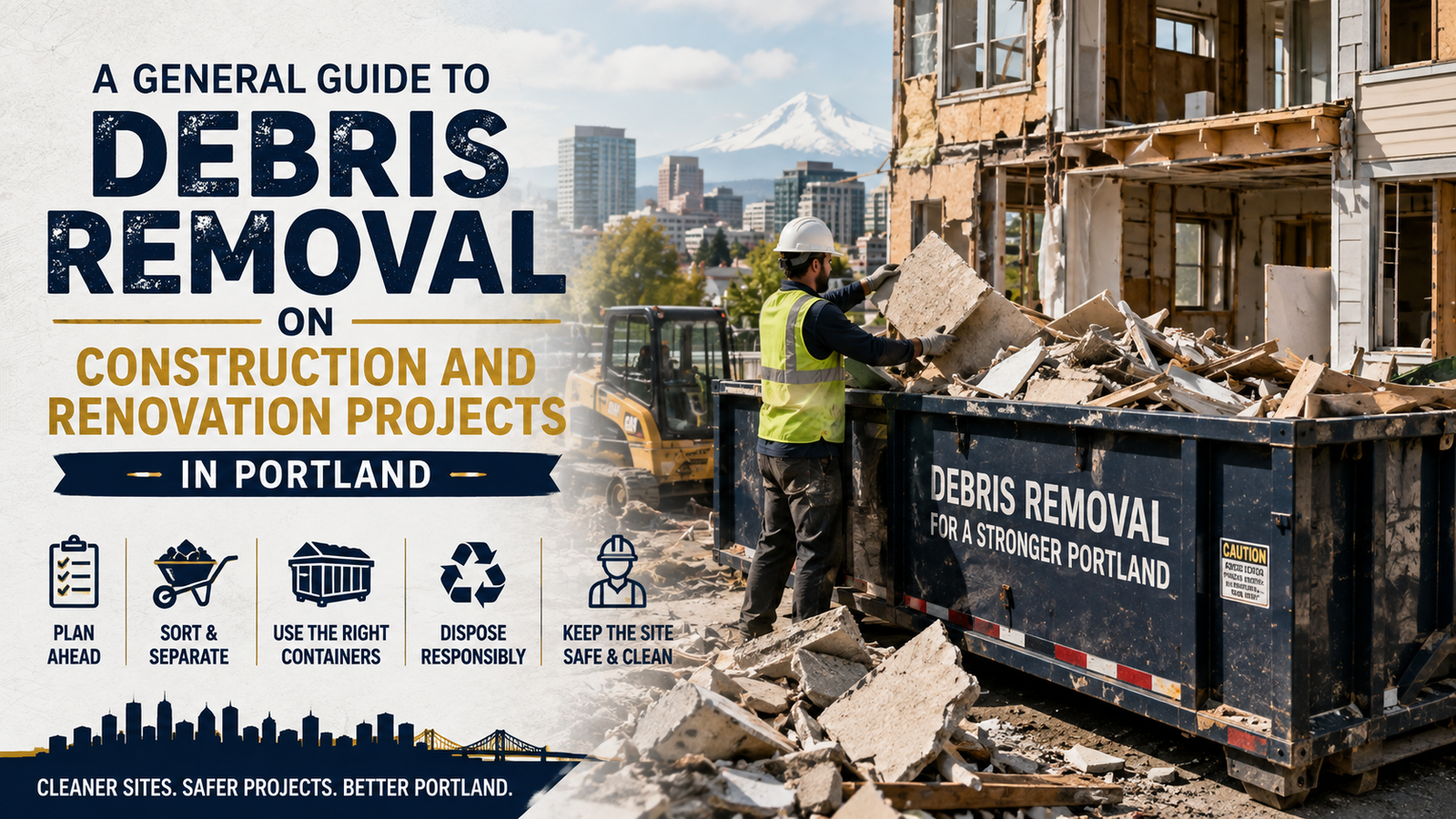
Any construction, renovation, or demolition project generates debris, and how that material is collected, sorted, and disposed of has real implications for site safety, project timelines, and environmental impact. In Portland, where the city has a strong emphasis on recycling and waste diversion, Debris Removal Portland is treated as more than just hauling material away; it often involves separating recyclable materials from general waste to reduce what ends up in a landfill.
This article covers the general, informational basics of how debris removal works on a typical project, what materials are commonly involved, and the questions that come up most often for property owners dealing with a renovation, cleanup, or demolition project in the Portland area.
What Counts as Construction Debris
Construction debris covers a broad range of materials generated during building, renovation, or demolition work. This commonly includes wood scraps, drywall, roofing materials, metal, concrete and masonry, insulation, packaging materials, and general demolition waste. The specific mix of debris on any given project depends heavily on the type of work being done, with a kitchen renovation generating very different waste than a full structural demolition.
Some materials require special handling due to safety or environmental regulations, including certain older building materials that may contain hazardous substances, which is why an initial assessment of what a project will generate is a useful early step before debris removal begins.
Why Sorting and Recycling Matter in Portland
Portland has a well-established culture around waste diversion and recycling, and this extends to construction and demolition debris. Materials like wood, metal, and concrete can often be separated and recycled or repurposed rather than sent directly to a landfill, which both reduces environmental impact and, in many cases, reduces disposal fees compared to sending everything as mixed waste.
Because of this regional emphasis, debris removal on Portland projects frequently involves more deliberate sorting than might be typical in areas with fewer recycling infrastructure options, and understanding this as part of the general process helps property owners see debris removal as an integrated part of a project rather than an afterthought.
The General Debris Removal Process
Most debris removal follows a similar general sequence. It typically starts with an assessment of the volume and type of debris expected, which helps determine what equipment, such as dumpsters or roll-off containers, will be needed on site. As work progresses, debris is collected and, where practical, sorted by material type. Once a project phase is complete or a container reaches capacity, the material is hauled to the appropriate disposal or recycling facility.
For larger projects, debris removal is often an ongoing process throughout construction rather than a single cleanup at the end, since keeping a job site clear of accumulated debris also supports safer working conditions for everyone on site.
Frequently Asked Questions About Debris Removal
What is the difference between construction debris removal and general junk removal? Construction debris removal typically deals with building materials generated during active construction or demolition work, while junk removal more often addresses household items, furniture, and general clutter unrelated to a construction project.
Can all construction debris be recycled? Not all of it. Materials like wood, metal, and concrete are commonly recyclable, but items like certain treated materials, some insulation types, and general mixed debris may need to go to a landfill facility rather than a recycling center.
How is debris typically contained on an active job site? Roll-off dumpsters or designated collection areas are commonly used to keep debris organized and contained, reducing the risk of material scattering across a site or onto neighboring properties.
Does debris removal need to happen throughout a project or just at the end? For most construction and renovation projects, ongoing debris removal throughout the work is standard practice, both for safety reasons and to keep the site functional for the trades working on it.
Safety Considerations During Debris Cleanup
A job site with accumulated debris presents real safety hazards, including trip hazards, exposed nails or sharp edges, and reduced visibility of walking paths for workers moving equipment and materials. Keeping debris contained and regularly removed is one of the more straightforward ways a project maintains a safer working environment throughout construction.
This is particularly relevant on active renovation projects where residents may still be present in parts of a home while work is underway in other areas, making a clear, debris-free path through the property an important safety consideration.
Handling Debris From Older Portland Properties
Portland has a significant number of homes built before 1980, and renovation or demolition work on these older properties sometimes uncovers materials that require careful handling, such as older insulation types or certain building materials used in past decades. Identifying these materials early, ideally before major demolition work begins, allows a project to plan for proper handling and disposal in line with current environmental and safety regulations.
This is one of the reasons a general site assessment early in a renovation or demolition project is a valuable step, since it helps identify what kind of debris removal plan will be needed before work generates a large volume of material to manage.
Environmental Considerations Specific to the Region
Because Portland places a strong regional emphasis on sustainability, debris removal often ties into broader project goals around minimizing environmental impact. This can include prioritizing facilities that recycle or repurpose materials over those that send everything to a landfill, an approach that aligns with the values many property owners in the area already bring to their renovation or building projects.
Understanding debris removal as an integrated, ongoing part of construction and renovation work, rather than a single cleanup task, gives property owners a clearer picture of how a well-run project handles this practical but essential aspect of the building process from start to finish.
How Weather Affects Debris Removal Timing
Portland’s wet season adds a practical layer of planning to debris removal, since materials left exposed to rain can become heavier, more difficult to handle, and in some cases less suitable for recycling if they absorb too much moisture. Wood debris in particular can degrade or grow mold if left sitting uncovered during a rainy stretch, which is why covered containers or more frequent hauling schedules are often used during the wetter months of the year.
Planning debris removal with the local weather pattern in mind, rather than treating it as an afterthought regardless of season, helps keep a project site both safer and more efficient no matter what time of year construction is taking place.
Coordinating Debris Removal With Neighboring Properties
In Portland’s denser residential neighborhoods, construction and renovation projects often take place on lots situated close to neighboring homes. Debris removal in these settings requires extra attention to containment, since scattered materials or overflowing containers can easily become a nuisance for adjacent properties. Clear placement of dumpsters or collection bins, along with a regular removal schedule, helps minimize any spillover impact on the surrounding block.
This kind of neighborly consideration is a practical, everyday part of responsible debris management on any urban infill or renovation project, particularly in established neighborhoods where homes sit close together.
How Debris Volume Is Typically Estimated
Before a project begins, estimating the expected volume of debris helps determine what size and how many containers will be needed on site. This estimate generally considers the scope of the project, whether it involves a single room, a full interior gut renovation, or a complete structural demolition, along with the type of materials expected, since dense materials like concrete take up container space differently than lighter materials like drywall or insulation.
Getting this estimate reasonably accurate at the outset helps avoid the inefficiency of too many container swaps on a small project or, conversely, running out of capacity partway through a larger one, both of which can slow down the overall pace of construction.
What Happens to Debris After It Leaves the Site
Once debris is hauled away from a Portland job site, its path generally depends on the material type. Recyclable materials like clean wood, metal, and concrete are typically routed to facilities that process them for reuse, while mixed or non-recyclable debris is directed to a permitted landfill facility. Some regions, including parts of the Portland metro area, have specific facilities dedicated to processing construction and demolition debris separately from general household waste, reflecting the scale and specific handling needs of building materials.
Understanding this general end-to-end path, from job site collection to final processing, gives property owners a fuller picture of how their project’s waste is handled once it leaves their property.
Debris Removal as Part of a Larger Renovation Mindset
For many Portland homeowners, the way a project handles debris removal reflects a broader set of values around sustainability and responsible building practice that runs throughout the entire construction process. A project that treats debris sorting and recycling as a genuine priority, rather than a formality, often extends that same careful, methodical approach to other phases of construction as well.
Keeping this broader context in mind, that debris removal is one visible piece of a larger commitment to responsible building, helps property owners appreciate why this practical, unglamorous part of construction still deserves thoughtful attention from start to finish.